Cleaning the pantry

There’s a long, narrow pantry off my kitchen.  I thought about posting a picture, but I’m afraid that making its state public would get me carted off to one of those hoarder intervention shows on cable TV.  I don’t really know the full extent of my hoardiness (that word being spelled carefully) because said panty comes complete with a sturdy door.  Out of sight, out of mind.

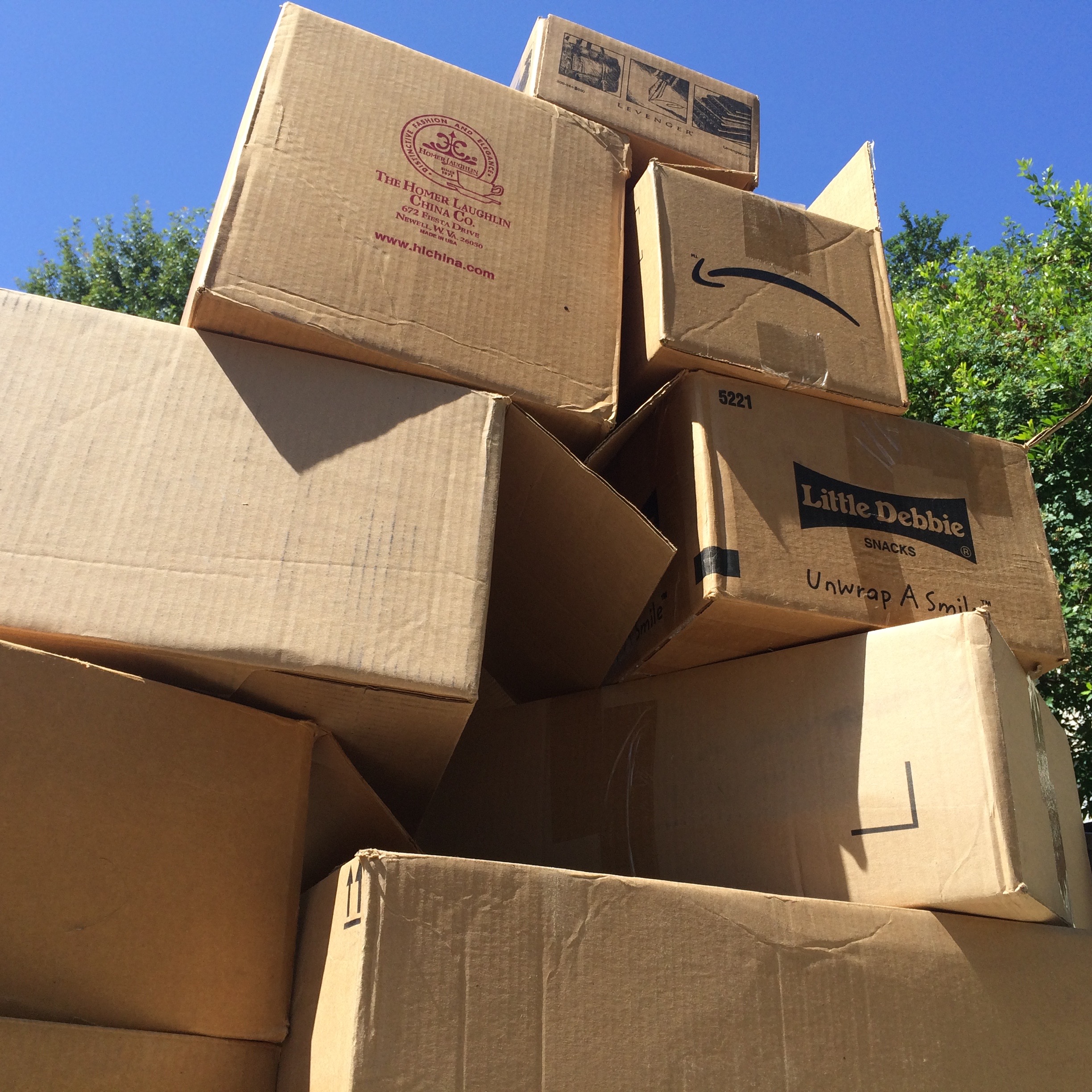
Unfortunately, the closed-door approach that has served me for over twenty years has become difficult.  In the process of purging an even longer span of classroom detritus, I wound up with a take-home pile of a dozenish boxes (mostly the kind that Lowe’s sells for 88 cents; I’ve long since discovered that it’s easier to buy boxes than to scavenge) in my living room:
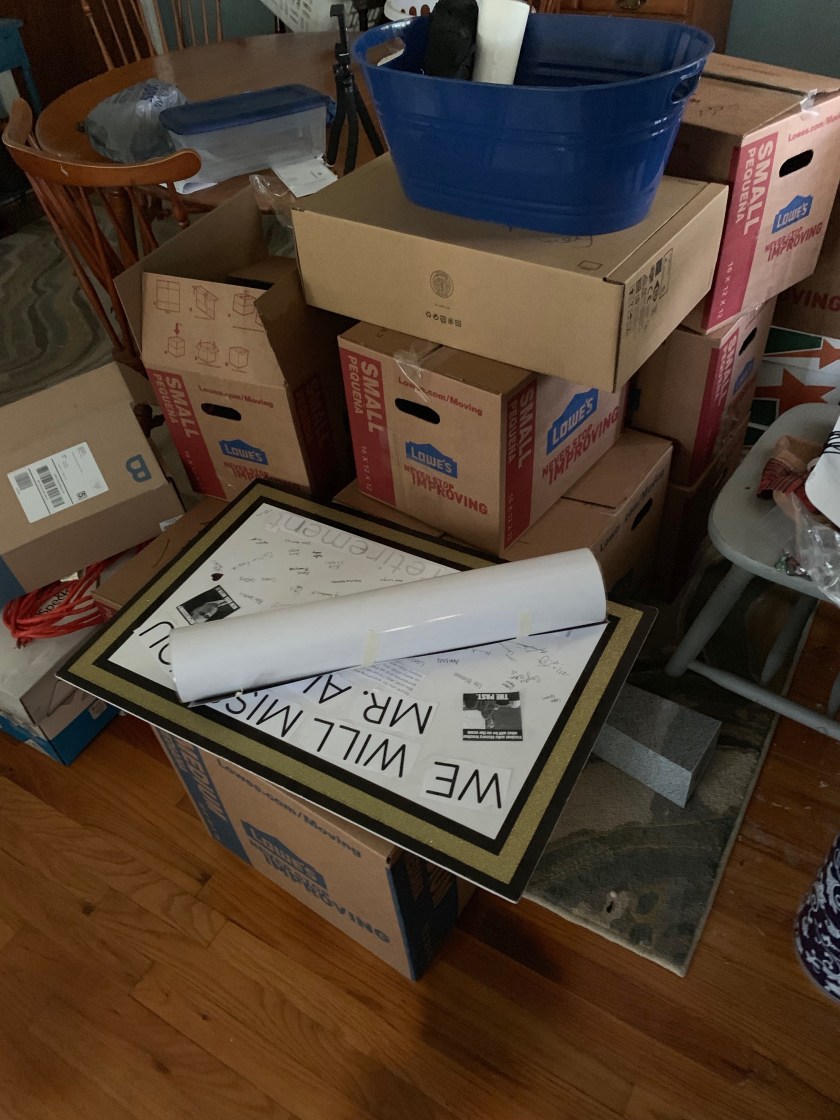
IMG_1083

The contents of some of those boxes (which I don’t need and probably shouldn’t have brought home in the first place) are going to have to go in the closed-door panty.  The pantry is full.  So, I find myself at an I-need-to-get-rid-of-stuff-before-I-can-store-more-stuff crossroad.  It’s a lot like having to empty the dishwasher before I can wash more dishes.  I don’t like emptying the dishwasher (that plastic stuff never dries, darn it) and I really don’t like cleaning pantries with decades of accumulation.  And people ask me how I’m enjoying retirement so far.

I found myself wandering from living-room pile to pantry door, hoping that I could come up with a more pressing project to facilitate procrastination.  And genius struck.  “I really need to add an entry to my blog,” I said to myself. Self smiled with relief.

Nevermind that I haven’t updated the old blog in nearly four years.  This is urgent writing going on. I’ll get to those boxes.  Someday.
Beginning

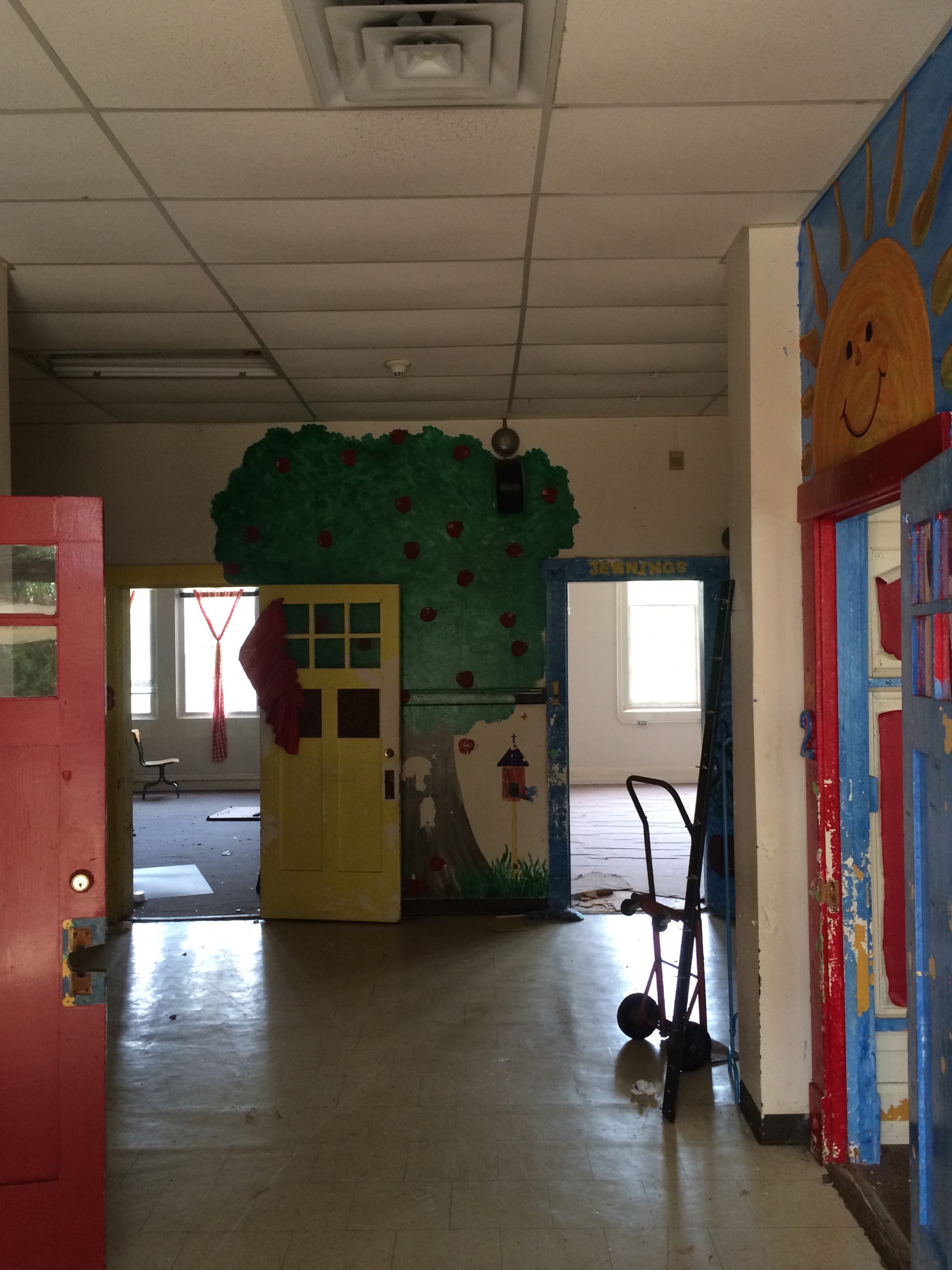
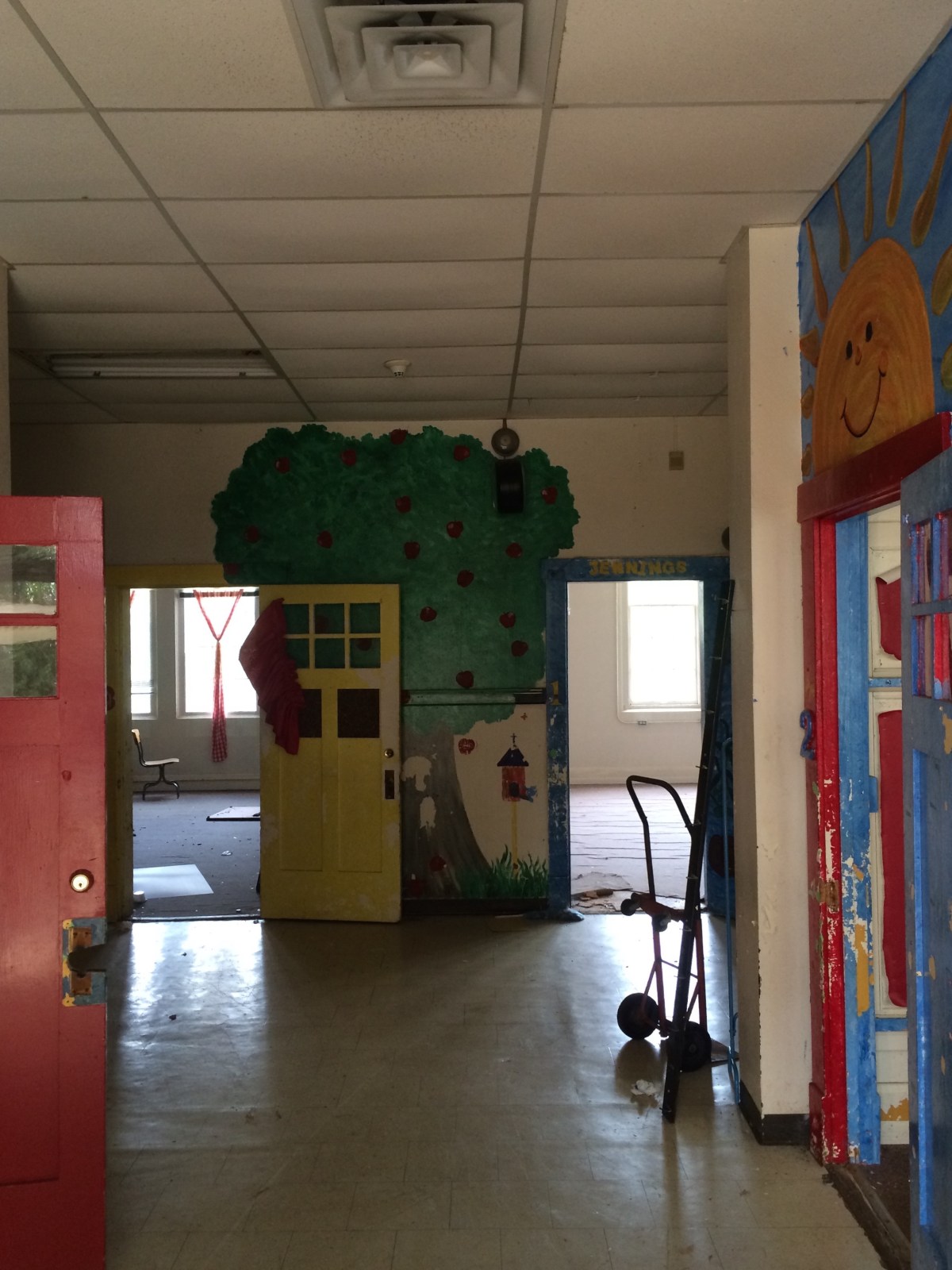
Some of the Central campus has been remodeled in recent months. The oldest building, though, sits quietly. My first grade classroom was the room with the yellow door.
Some of the Central campus has been remodeled in recent months. The oldest building, though, sits quietly. My first grade classroom was the one with the yellow door.

Fifty years ago today, I started first grade. I think. The year—1965—is easy to determine with a little math that even I can manage.  The actual date—September 2—is trickier, but I’m pretty sure it’s accurate. For the first quite-a-few years of my school career, HISD reliably commenced with a shortened registration day on the Thursday before Labor Day, held a full day of class on the Friday, and began in earnest on the following Tuesday. A google of the 1965 calendar shows that Labor Day that year was on September 6, so the Thursday before would have been the second.  Voila.

I probably wasn’t non-cool enough to admit out loud that I was excited about being a first grader, but I was privately beside myself with anticipation. I remember well. Reading was my Holy Grail. The desire to decipher those letters was tastable. I couldn’t wait. I wanted to read.

That short-day registration on Thursday was a frustration. I was ready to get started.  I wanted to read.

Friday finally dawned, and I was totally stoked as I strolled through the arched entrance of the old building at Central, armed with fat first-grade pencils and fat first-grade crayons and one of those tablets with solid and dotted lines. The Great Day had arrived.  I was ready to read.

I didn’t learn to read that day. What I did encounter was the opening salvo of a lesson I still haven’t mastered: beginning is hard. And slow. And requires patience.

We spent a good chunk of that first morning learning the sound that the letter O makes. I already knew that. I was, after all, a fortunate graduate of Mrs. Wright’s kindergarten. Days later we moved on to when two vowels go walking, the first one says his name and the next one stays quiet. Progress, but the trip through phonics land was tedious and never really hooked me.

True, before my five years at Central were done I could rip through the weighty works of Laura Ingalls Wilder with fair confidence. The old red brick school did me proud. I just didn’t realize on that first day how long it would take those two walking vowels to reach the log cabin on the prairie. Beginnings are slow.

Time circles. This year, I spend my afternoons on, once again, the Central School campus. Several of the buildings have been refurbished as a higher education center; my dual credit history classes meet there. There’s something nice and altogether fitting about starting a new school year in the place I began.

My classroom is in a building that didn’t exist when I was a lad. It’s carpeted and air conditioned (remember when schools were not?) and equipped with technology beyond any reach of the 1965 imagination. The other day, while waxing eloquent on 16th century European exploration, I glanced out the window and realized I was standing on the site of an old kickball field, probably near what was once third base. I hope I’m more effective in the classroom now than I was on that field then. Those never my finest hours. It has taken me all of a half-century to reach the neighborhood of third base without being conked by a kickball en route—talk about your slow beginnings and long trips—but patience pays off and I’m beginning again. At home.

Boxes

IMG_0698A friend of mine who is moving recently put out an appeal for boxes. I was able to help. There are always spare boxes kicking around my house. Yeah, my pantry is a hot mess, but I do hate to throw out a good box.

Hi, my name is Tracy and I’m a box-o-phile. I think it’s genetic. I got it from my grandmother. She was always on the lookout for boxes. No evening trip through town with Mama Dear was complete without a stop at the bin behind M.E. Moses. I’m still not sure why she needed all those boxes. Now that I know how grandmothers work, I suspect she that wanted to please me more than she needed to replenish her supply. I certainly always got a bang out of those treasure hunts in that alley.

There’s just something magical about an empty box.  Boats, forts, spaceships, and hiding places when you’re In Trouble are all possible with a good box. It’s been years since I’ve drawn headlights and grill with a magic marker and zoomed away the afternoon, but I remember. I remember.

THE BOX that we are encouraged to think outside of has become a symbol of all things restrictive and reactionary. Maybe that’s a decently helpful image, but the boy in me knows that really creative thinking happens while surrounded by corrugated cardboard.

Nightmaring

Come spring in the 60s, an often-heard trope in the teacher talk at Central Elementary began “IF I pass you to the next grade…” Knowing what I now know about kids (and teachers, for that matter) and spring fever, I doubt that the implied threat, however dire, had a lasting impact on classroom deportment. I do remember, though, that the prospect of having to repeat the year was troublesome. I used to worry about it.

I was relieved when I got my final report card at the end of first grade. It clearly showed that I’d been promoted:

1stGrade

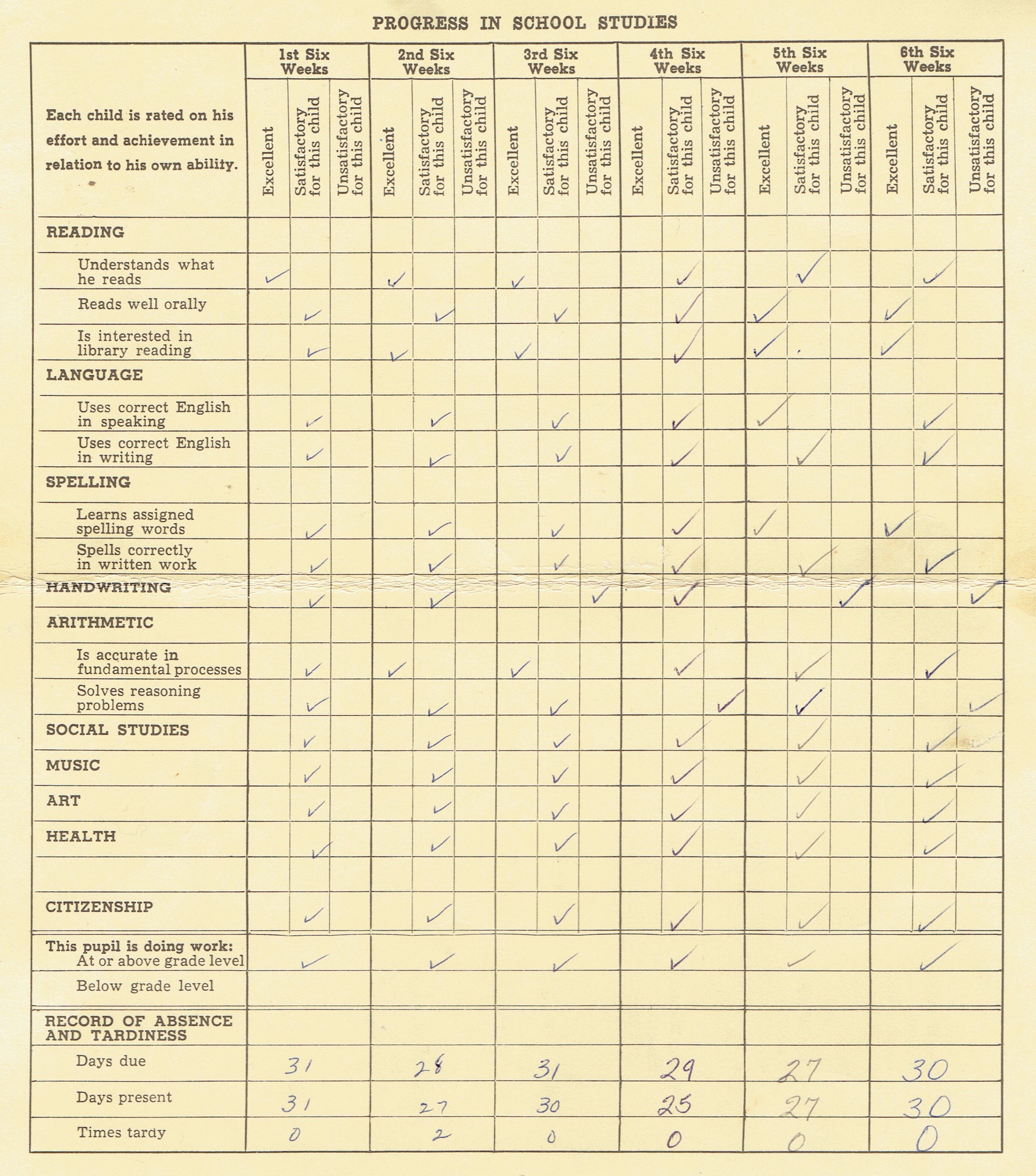
The next year was brutal for a number of reasons; in fact, I didn’t encounter anything quite as harrowing school-wise until my last year of grad school. It’s no surprise that my second grade report card was less than stellar:

ReportCard

(For what it’s worth, I STILL can’t do math and my handwriting is STILL atrocious).

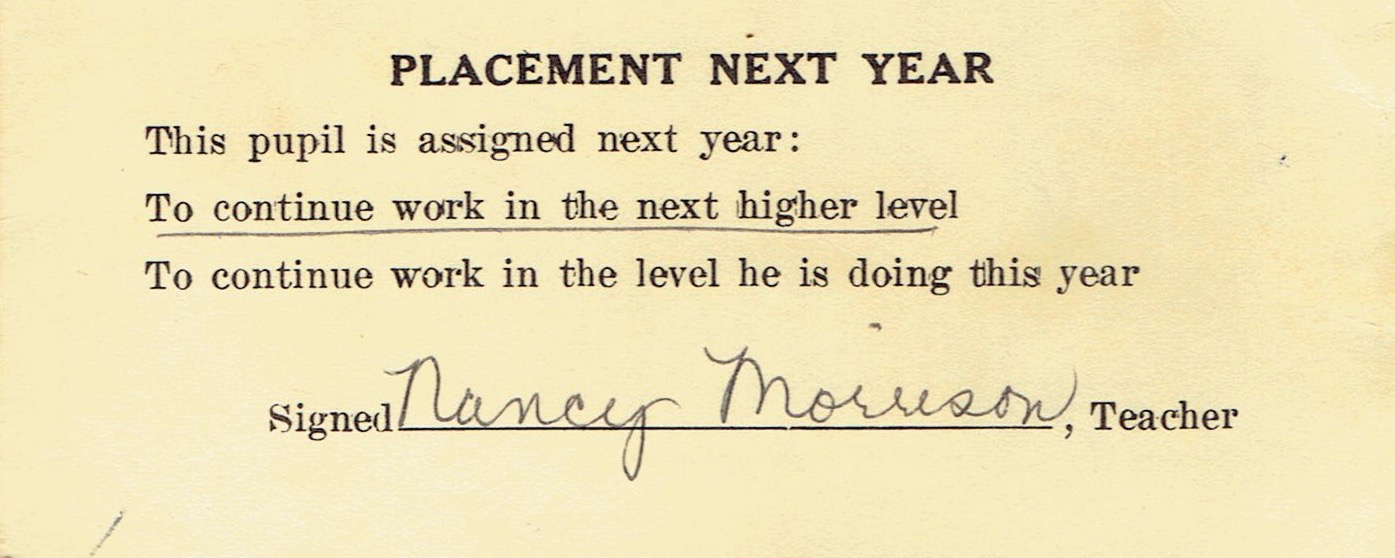
Even more upsetting was the promotion/retention blurb on the back:

2ndGrade

What did that mean? My first grade teacher had clearly underlined the happy news about my promotion. But now what? Was the dreaded “continue work in the level he is doing this year” marked out or was it sloppily underlined? I puzzled over those two sentences and that ambiguous mark for weeks. Being me, I internalized my fear and spent the summer in a quiet dither filled with wide-awake nightmares. I absolutely convinced myself that when school started in September (yes, school actually started in September then) we wouldn’t find my name posted outside a third grade classroom. My mother and I would be forced to make a walk of shame back to the second floor of that old, old building where the second grade classes met.

(For the record, I did pass to the third grade and entered the classroom of Mrs. Tate, who is one of my top-five all-time favorite teachers. Things were much better that year).

I now know that my summer of nightmaring was silly. I’m quite sure that even in the 60s retention of a student came only after extensive parent conferences and whatever passed for remedial intervention in those days. That dreaded PLACEMENT NEXT YEAR section of the report card was only a surprise for me. Despite all of those “IF you pass” threats, there was never a potential walk of shame to the second grade hall on the table.

What was earth-shattering in the second grade is fodder for chuckling today. Back then, I certainly never anticipated  that I would one day air the embarrassment of unsatisfactory math and handwriting grades in front of FaceBook and probably all of Google. I never thought that I would openly discuss my secret fear of second-grade failure on the WWW. (I did, however, think that I might one day vacation on the moon; in 1966 we had a different view of the direction that technology would one day take us).

Surely herein is a lesson: I wonder how many of my current daytime nightmares spring from incomplete knowledge, vague marks, and silent suffering? And how many will I laugh about in 50 years?

Commencement

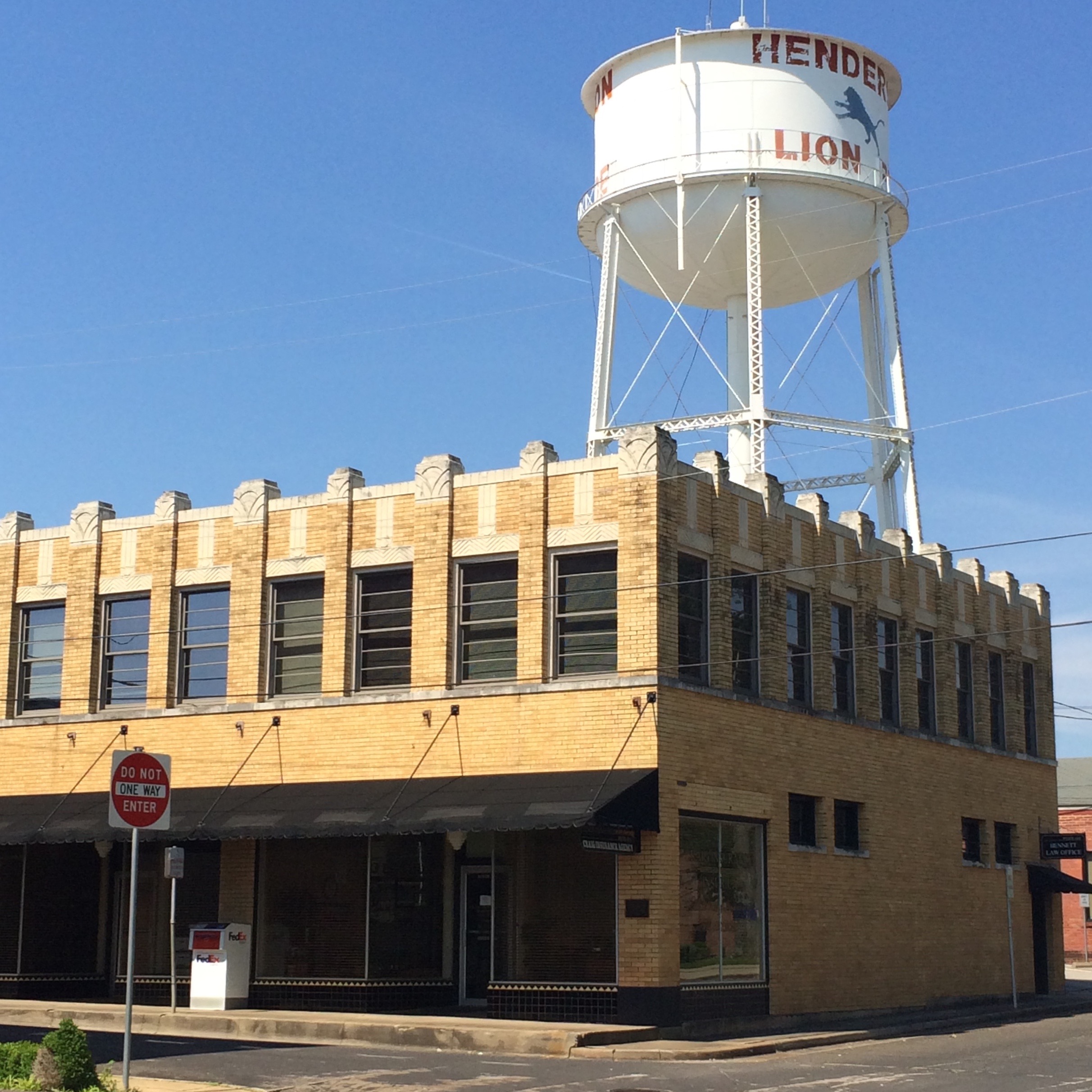
IMG_0571 I’ve been thinking lately about everyday sights that we see without noticing. For me, a fairly obscure building tucked under the water tower by the courthouse usually escapes my attention, but it has the power to be downright ahhh-inducing when it catches me in one of those oh-yeah-that’s-where-I moments. My one trip through those doors was to pick up graduation announcements from a now-defunct printshop that once occupied the building. That box of still-damp ink touched off a string of heady days in the spring of 1977 that signaled the beginning of the end of high school. And presents. Ahhh-inducing indeed.

I realize now, though, that the HHS graduation exercise of 77 wasn’t the beginning of the end for me. It was the beginning of the beginning: a commencement in the truest sense of the word. In a few hours, I’ll yet again enter Lion Stadium to the strains of “Henderson Festival March.” Commencing one more time.

Even if I can’t say that donning coat and tie for an outdoor June event tops my “Raindrops on Roses and Whiskers on Kittens” list, I always get a vicarious sense of satisfaction and accomplishment as I follow the bobbing mortarboards around the track. Oh, I can step far enough away from my inherent narcissism to know that eyes will focus on the current graduates rather than the huddle of faculty members skulking behind, but the experience is still valuable. At a time when my middle-aged conservatism wars against Change, Upset, and All Things New, I’ve come to look forward to an annual reminder that our walk along the longer track is nothing more than a series of commencements, of beginnings-again. Just without the presents.

Sufficient disquiet

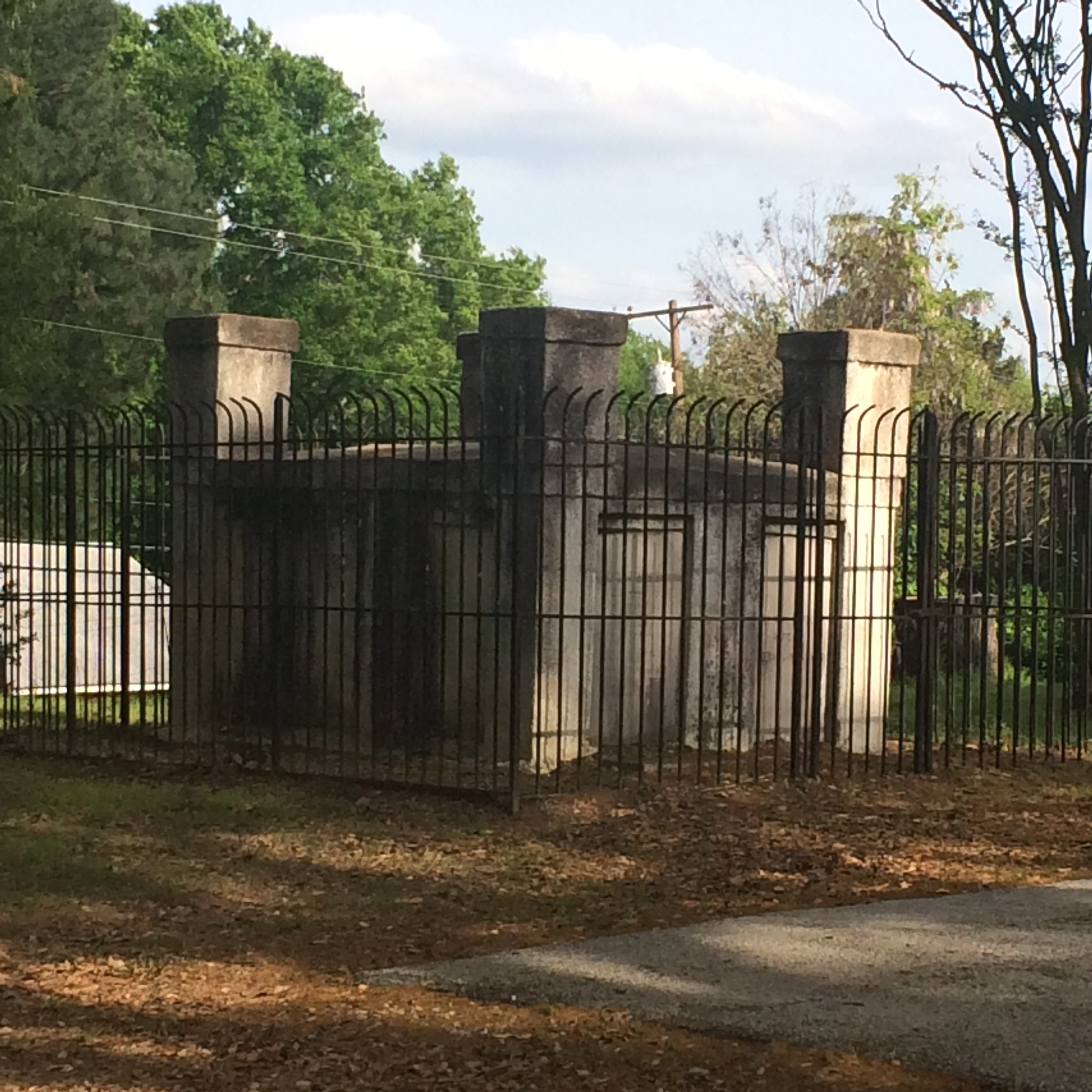
IMG_0436My bedroom window overlooks a cemetery. Half a century ago, when I was troubled by Monsters Under The Bed and other assorted nighttime horrors, that thought might have disturbed me. Now, I find the view pretty serene except for those early summer mornings when city workers roll out lawn mowers and weed eaters at first light.

General James Smith and family rest in pace in perhaps the most-seen and least-noticed cemetery in town. Surrounding streets hustle us daily to town and to Lowe’s and to Kroger, but the little park in the crook of one of Henderson’s truly monumental intersections is generally unheeded and forgotten, much, I’m afraid, like those who rest there.

That’s rather sad. Even a shallow surf of the www brings waves of info about General Smith. He cut something of a figure in early Texas. He was a veteran of both the War of 1812 and the Texas Revolution, the donor of land for the city of Henderson, and a Rusk County delegate to the Texas House. His Fellow Founders thought enough of him to name our neighboring county in his honor, and it’s possible that a design on his coat button inspired the Lone Star itself. That’s quite a resume.

Urban legend once held that grateful Hendersonites buried Smith standing up, facing the downtown square a mile away. As far as I know, snopes.com has never investigated, but I think I can debunk that rumor on my own. Up close, the tomb is only about chest high. If the general is upright, he was a short man indeed.  It’s a cool story, but discountable. That’s a good thing; poor ol Gen’l Smith deserves a comfortable repose after all that soldiering and representing and namesaking and logo designing and all.

So General Smith and I sleep snoring distance apart. His rest is horizontal (hopefully) and eternal; mine, not so much. I haven’t worried about Monsters Under The Bed in a very long time, but different thoughts sometimes bump my nights and disturb my slumber. The general’s world is not mine. I doubt he ever spent a night wondering if his online bank account would be hacked, or if his central air unit would hang on through one more summer, or if his students would survive the latest high-stakes, state-mandated standardized assessment. Surely those nineteenth century Texians had it easy. On the other hand, though, I can’t say that I’ve ever lost much sleep over uprooted and hostile Native Americans, or a marauding Santa Ana, or wondering whether or not I could make a midnight run to the privy without stepping on a rattlesnake. Sufficient unto each generation is the evil thereof, I guess.

Silence

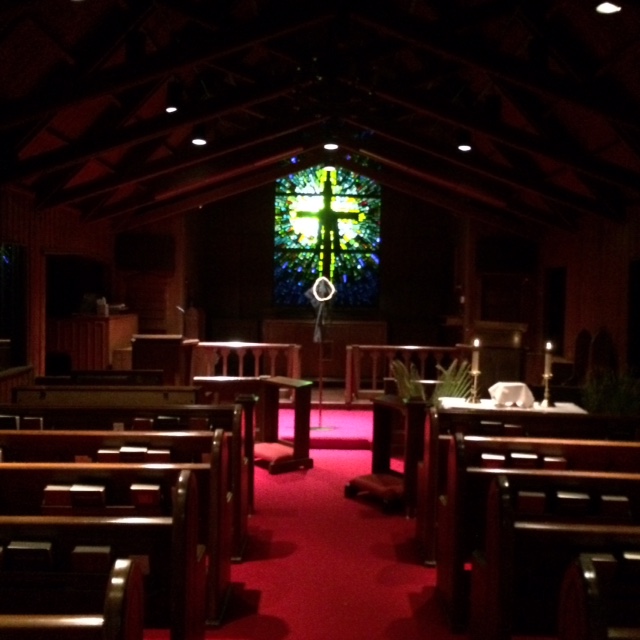
vigilThere’s always something off-kilter about being in a familiar place at an unexpected time. Nights and weekends, I avoid the schoolhouse. Nevermind that my presence there at odd hours signals that I’m trying to get caught up on something I didn’t want to do in the first place (darn those ungraded essays); an empty school has way too many groans and echoes. It’s creepy.

Tonight I make an odd-hour visit to a place that’s at least as familiar as my classroom. Holy Week is here, and I’m pulling my annual late-night vigil shift. It’s an hour of watch in a darkened church before a laid-bare altar.  It’s a duty I never miss.

All is quiet.  Oh, there’s the hum of the AC and the protest of the aging pew as I shift my ponderous corpus, but the silence is a special kind of thick that I meet only once a year—always on this night. Tomblike, perhaps.

No one can accuse me of being especially spiritual. I sometimes envy those who speak the language of faith with easy familiarity. I can’t. I squirm. Certainty comes hard, and grasp of the Things Beyond usually flits just beyond my reach.

In this place, though, I can understand the uncertainty of Thursday as it rolls into the desolation of Friday.  The church is dark and bare. And silent.

Even so, even in this dim light, even I can rouse enough hope to whisper into the silence: Easter Comes.

My mother’s bench

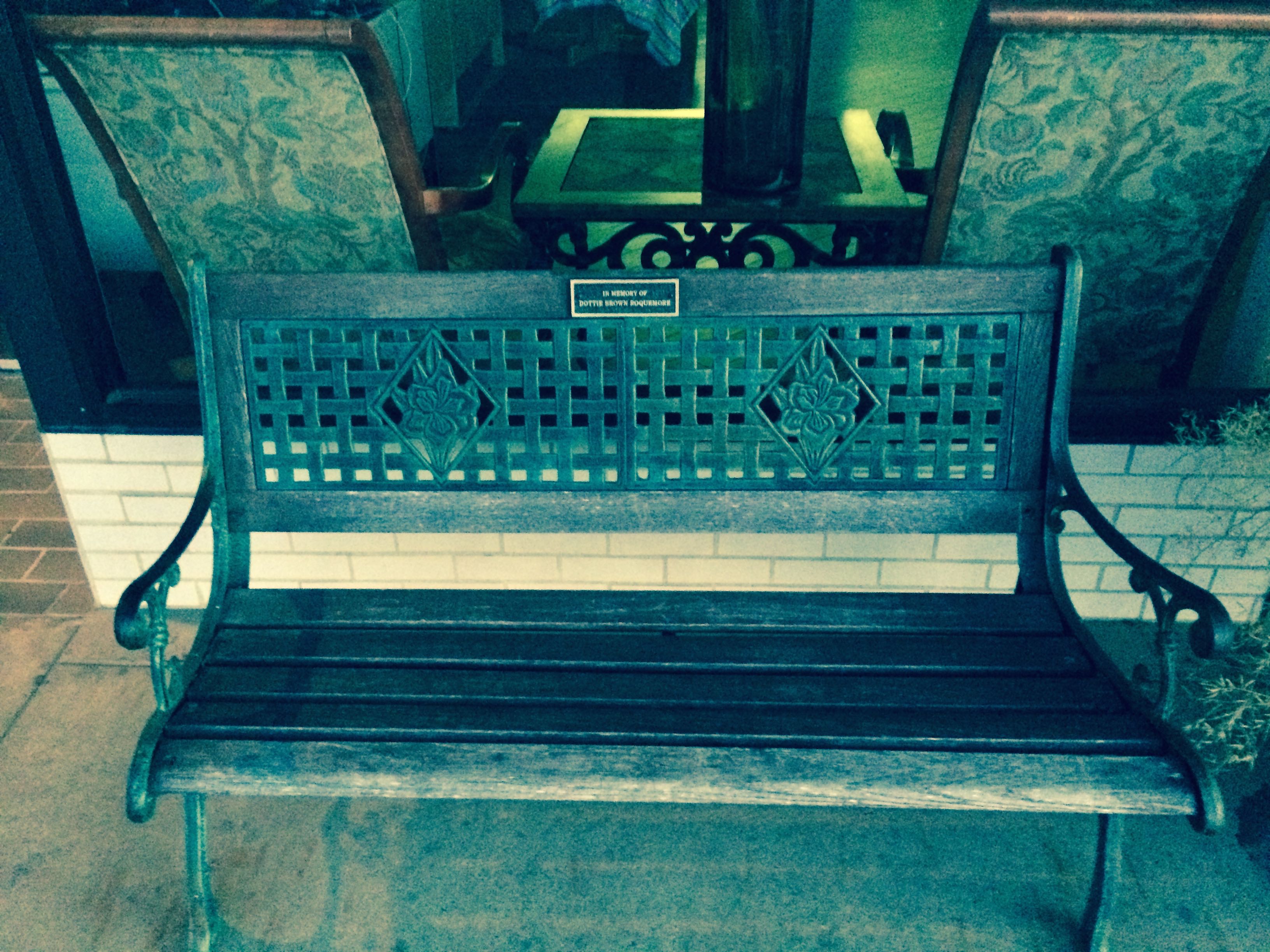
benchThere’s a bench in front of the library with my mother’s name on it. I don’t recall my mother ever being one to idle on benches (although she sometimes hinted of nights “sitting on the square” which was, I think, A Thing in the 50s), but I’ve always thought that there’s nothing more fitting to her memory than that bench.  It was given by her classmates, who apparently also remembered nights on the square in the 50s.

My mother loved that library. She was an every-other-Wednesday patron for years and years.  Once she sent me to return her books with the instruction “just tell them to give you something they think I’d like.” The librarian was helpful, but she admitted I was setting her a rough task.  Checking the file she said, “Dottie’s already read everything.”

I had a library card before I could read…maybe before I could walk.  Mother made sure of that.  And that, in a lifetime of gifts, was perhaps her greatest gift to me. I can’t say that I’m much of a library user these days; it’s too easy to download from Amazon without budging from my recliner. The love of pleasure reading, though, has been mine forever.  A gift.

Screen doors on grocery stores and the uncertainty of hmmm and hmmm

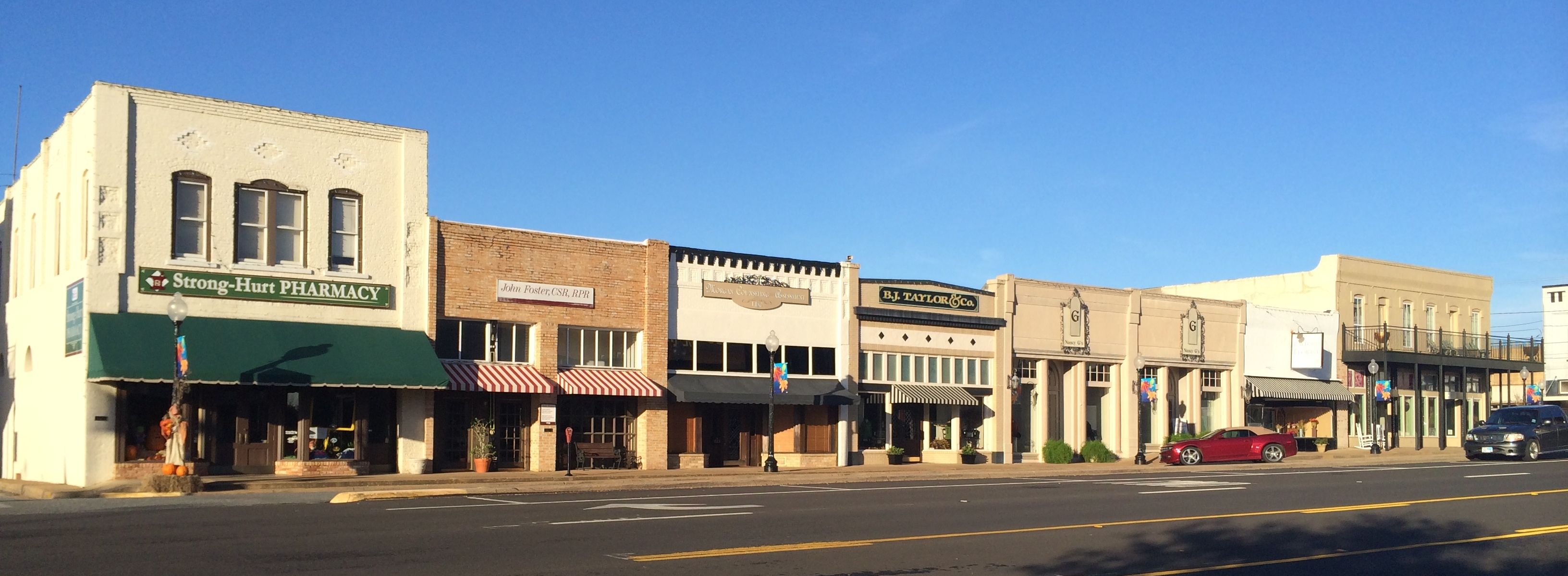
A Faithful Reader (verily, there are no more reassuring words to a beginning blogger than faithful reader. Thanks, George) asked if I remember a silver dollar that was embedded in the sidewalk in front of a grocery store on this block:
MainStreet
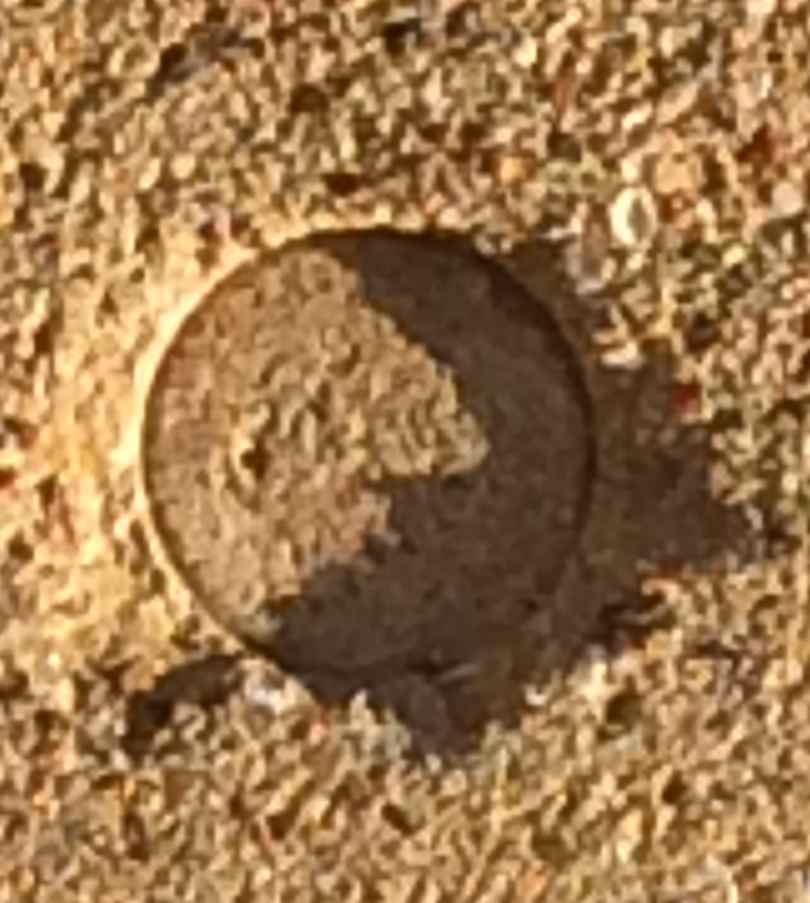
I remember. The other day I did a little slow, head-down walking and discovered a coinish circle near the door of B. J. Taylor & Co. coinI’m pretty sure that the silver dollar once nested there, but, like the grocery store that once occupied the building, the coin is gone.

I’m not surprised. Collectible coins can’t be expected to stay in one spot on a public sidewalk forever. Neither can grocery stores. The thought that leaves this Modern—though somewhat unenthusiastic—WalMart Shopper breathless is the suggestion that folk once procured the weekly provender from small stores in the middle of main street blocks. The notion of buying groceries from Mom-and-Pop on the square is almost as foreign to me as the idea of hiring a hack from the local livery stable.

But not quite. I can easily remember another downtown market—Mrs. Jack Moore’s store—around the corner on South Main. It was a cool store. Mrs. Moore presided over the cash register and occasionally slung slabs of beef behind the meat counter. I stopped there many times. Even now, when I stroll past the bank parking lot that absorbed her building, I get a mild craving for an ice cream sandwich from her freezer case.

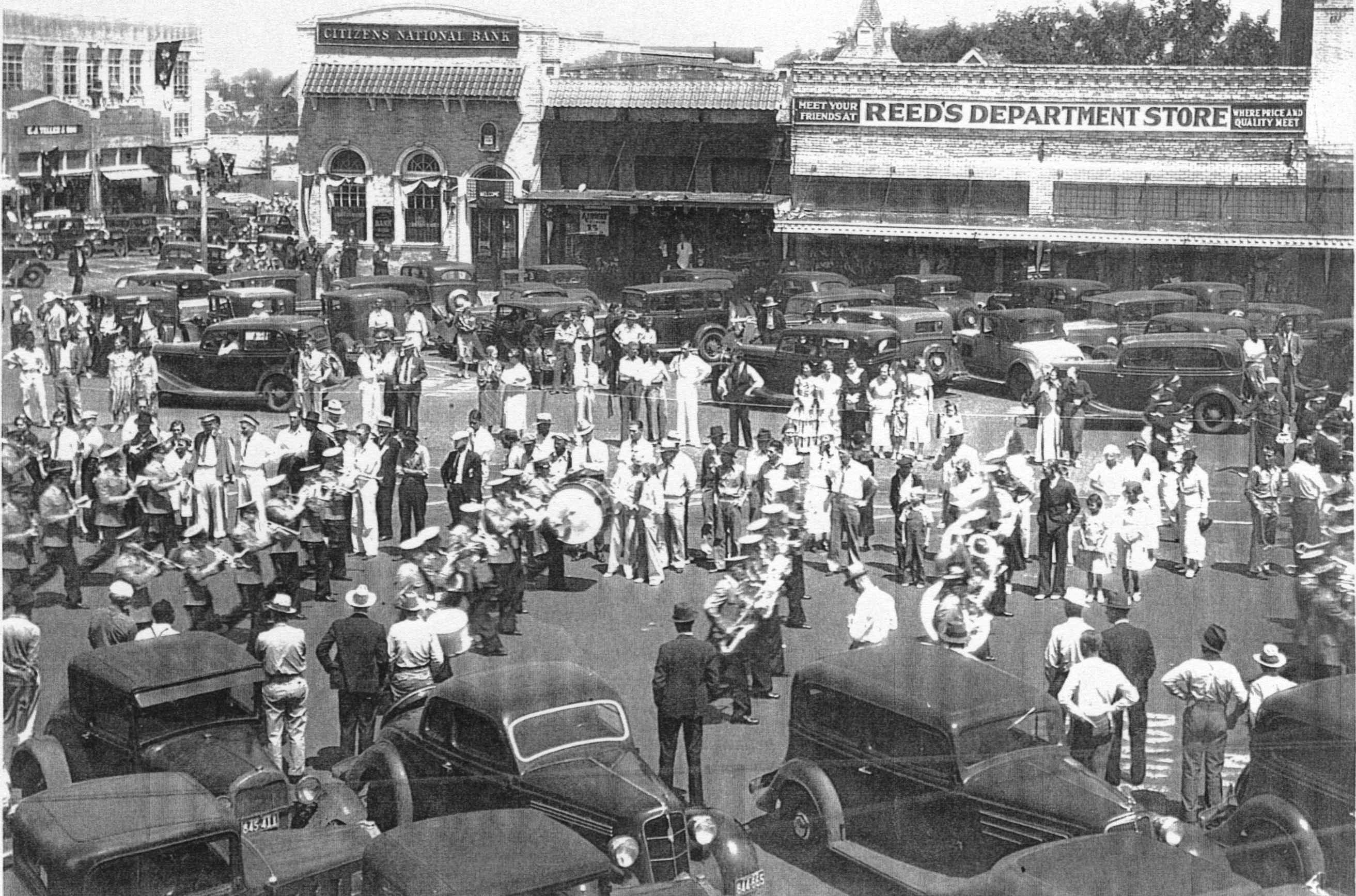
Truth be told, my knowledge of downtown grocery stores should be much more complete. My great-grandfather owned one. I’m not sure where it was, but I have an unverified impression that it was in the same block as Citizens Bank. Armed with that uncertain fact, this photo intrigues me:
paradem 1

Could that be my great-grandfather’s store tucked between Citizens Bank and Reeds Department Store? Could that be my great-grandfather lounging in white in the doorway?

I wish I knew. I recall only one other thing about the store. My grandmother was fond of telling that “Papa’s Store” was the first modern grocery in Henderson because it had (or didn’t have–I can’t remember which)  screen doors. For the life of me, I can’t decide if screen doors on a grocery store represent technological progress or regress. I can argue the case both ways.

Dennard’s Grocery (if that’s what it was called) was gone long before I was a gleam in anyone’s eye. It’s not too surprising that I can’t wax eloquent about the modernity (or lack thereof) of screen doors on grocery stores or about watching parades while lounging at a screen door (or not) in white. I could have known more, though, if I’d listened when I had the chance. My memory could have been full, flowing deep and wide like the fountain in the old Sunday School song. Instead, I can only sing the second verse, replacing certainty with hmmm and hmmm as I go. My lot is to peer through the glass darkly. I wish I had paid more attention to my grandmother.

I’ve known sidewalks

I’ve always liked the Langston Hughes poem that begins “I’ve known rivers ancient as the world and older than the flow of human blood in human veins.” The words are mildly shiver-invoking. Hughes understands memory.

I don’t really know rivers–unless  you count zipping across the Sabine into Longview a few times a month–but I’ve realized lately that I have known sidewalks for a long time. That’s been my pleasure the last few weeks: becoming reacquainted with the sidewalks I once knew.

The first sidewalk in my world still edges North High. I played there with my cousin. We rode tricycles and pulled red wagons and sometimes aggravated an even smaller boy named Murray who lived next door. Passing now, I can close my eyes and picture Aunt Modine pulling curbside in her brown and white car, elegantly dressed and ready for her afternoon kaffeeklatsch with Aunt Wilma.

Farther along, I remember a spot across from the old library that once had an incredibly nasty word dried into the cement, pruriently delighting fourth-grade boys. That word is no longer there. I looked for it the other day.

Downtown, there’s a chunk of purgatorial pavement in front of the building that was once Sears & Roebuck. I hit the curb wrong with my bicycle late on a Sunday afternoon and slid along on elbows and knees. I didn’t think my wounds were serious, but my mother had a conniption when I limped into the house. I had to get a tetanus shot. The shot was more traumatic than the crash.

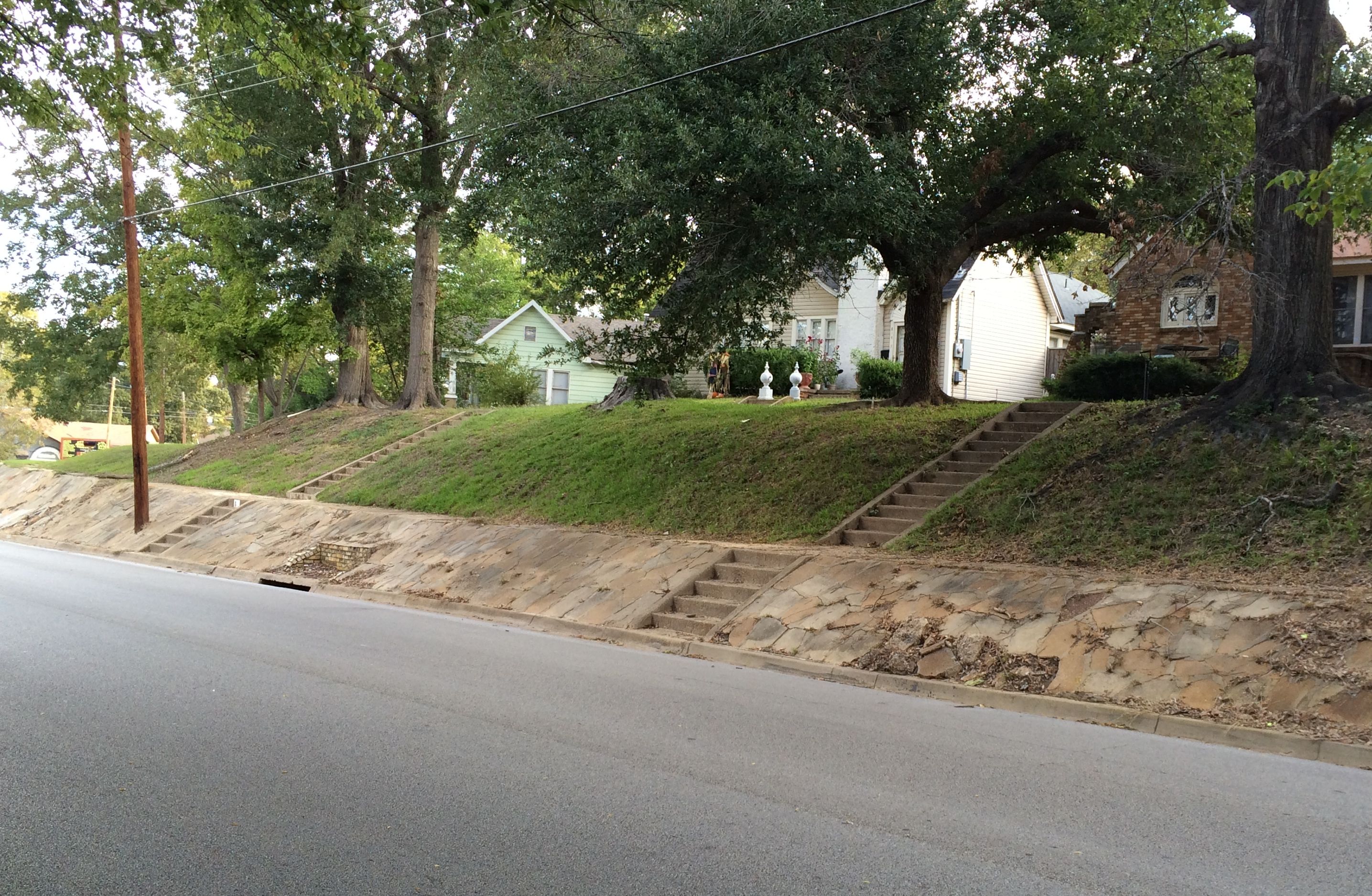
Most intriguing, though, is the sidewalk that hovers above the street near the joining of North High and North Marshall. That intersection is no longer on my beaten path, but I pass by occasionally. I almost always think Halloween when I do.
nhigh
We finished up the usual trick or treat trek in that neighborhood one year.  As best I can calculate, it was 1965 and I was a first grader. Time was late—probably not yet seven o’clock, but it seemed late—and dark and chilly. I remember standing high on that embankment that night. A souped-up car roared by on the street below. The shutter clicked somewhere in my mind, and the moment has been with me for nearly fifty years. That’s my frozen-in-time Halloween memory: that sidewalk and that cool, October darkness and that sputtering car. Some people have special songs that conjure up potent memories. For me, the roar of a distant engine on an autumn night is still slightly spooky and always means Halloween on the sidewalk above North High Street.

I’ve known sidewalks for a long time.